
Living in Thailand
In short
Living in Thailand starts with the right long-stay visa: the DTV for remote work, retirement from 50, or Thailand Privilege.
Can Americans live here?
Can US citizens live in Thailand? Yes, on a long-stay visa: the DTV for remote workers, a retirement visa from age 50, or a Thailand Privilege membership.
For a first look, it's easy. Since 15 September 2026, travellers from 60 countries and territories, including the US, UK, Canada and Australia, can visit for up to 30 days without a visa, TAT News says.
Visa-free entry is for visiting, not living: you can't work or stay long on it.
Pick the long-stay visa that fits your age, income and plans. Ask Tanner to have a car waiting for the scouting trip.
- 50+, ฿800,000 or ฿65,000 a month
- 180 days per entry, 5 years
- Cheapest in Chiang Mai
- Set by the city; Bangkok costs most
- needs a work permit
The long-stay visas
The right visa depends on your age and how you earn.
The retirement visas need you to be 50 or over, with the savings or income in the table. ISSA Compass (updated October 2026) says you report your address every 90 days on form TM.47, the first time in person.
None of these visas lets you work for a Thai employer without a work permit. See our Thailand DTV visa and Thailand Elite visa guides before you apply, then ask Tanner to line up your first week.
DTV (Destination Thailand Visa)
- Who it suits:
- Remote workers, Muay Thai, long courses
- The key rule:
- 180 days per entry, valid 5 years; ฿500,000 in assets
Non-O / O-A retirement
- Who it suits:
- Age 50 and over
- The key rule:
- ฿800,000 in a Thai bank or ฿65,000 a month income
Thailand Privilege
- Who it suits:
- Anyone, by membership
- The key rule:
- From ฿650,000 for 5 years, up to 20 years
O-X long stay
- Who it suits:
- Age 50 and over, set nationalities
- The key rule:
- ฿3 million held a year, for up to 10 years
 AI
Is it still cheap?
Living in Thailand as a foreigner is still cheap on most Western incomes, and rent is the biggest saving.
One person's month runs about ฿33,500 to ฿77,000, about $1,000 to $2,300 (checked August 2026).
Food, transport and evenings out cost far less than at home, too.
Electricity is the hidden cost. Bills roughly double from March to May with the air-con on, and many condo buildings charge 6 to 10 baht a unit against the state rate of about 4.
Insider tip: ask the landlord for the unit rate before you sign. Ask Tanner which areas suit the way you live.
What a month costs, city by city
The city matters most: Chiang Mai is the cheapest of the big three, and Bangkok and Phuket cost the most.
These are August 2026 figures for one person. Try a month before you sign a lease, and ask Tanner to have the car at the airport.
Bangkok (Sukhumvit, Silom, Sathorn)
- One-bedroom rent:
- ฿20,000–33,000
- A comfortable month:
- ฿60,000–80,000
Chiang Mai (Nimman, Old City)
- One-bedroom rent:
- ฿12,000–20,000
- A comfortable month:
- ฿40,000–60,000
Phuket (beachfront condo)
- One-bedroom rent:
- ฿26,000–50,000
- A comfortable month:
- Not given
 AI
Is $3,000 a month enough?
Yes. For one person, $3,000 a month is enough to live well in any Thai city.
It covers even the comfortable central-Bangkok month in the table above, with room left for weekends away.
At $3,000, you rent a good condo, eat out daily and travel at weekends.
For a couple, the same money is comfortable in Chiang Mai and tighter in central Bangkok. Price your own month on a trial stay, and ask Tanner to plan the weekends.
 AI
How long $10,000 lasts
At the one-person range above, $10,000 lasts about four to ten months.
Living lean in Chiang Mai stretches it to the top of that range.
Budget for the start-up costs too: a deposit, flights and your first visa.
For a long stay, keep a reserve for health care and the next visa. Ask Tanner to have a car at the airport the day you move.
Retiring on $100,000
Yes, $100,000 can fund a retirement for several years, and it covers the retirement visa's deposit.
That ฿800,000 deposit is about $24,000 at roughly 33 baht to the dollar, and it has to sit in a Thai bank before you apply. ISSA Compass gives both two and three months, so check with immigration first.
The rest, at about $1,000 to $2,300 a month, funds roughly three to six years.
Health insurance is the big cost for retirees, so price it before you move. Ask Tanner to set up your scouting week.
The pros and the cons
The pros are the low cost, the food, the beaches and the easy travel; the cons are the visa admin, the heat and the city air.
Thailand's long-stay visas are generous, but each one comes with paperwork and regular reporting.
Chiang Mai has the cheapest living but the worst air in the burning season: IQAir ranked it among the world's ten most polluted cities in March and April 2026.
Bangkok has the best transport, health care and nightlife; the islands have the beaches but cost more. Ask Tanner to plan a week in each before you choose.
Settling in
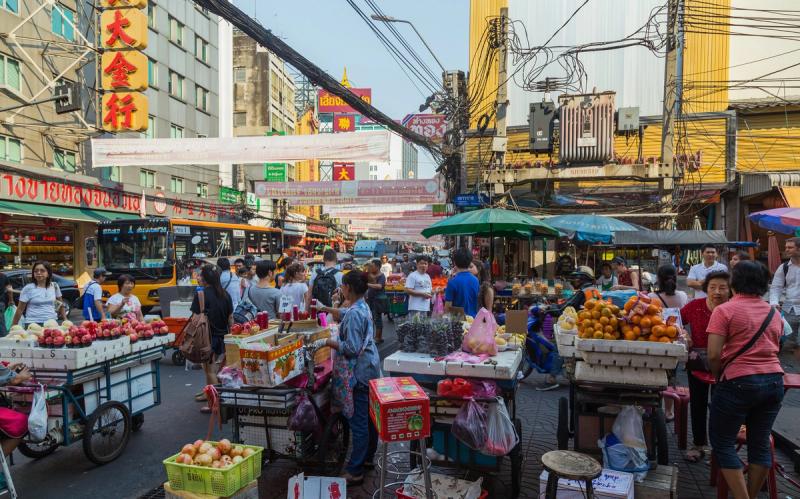
The first month is about small things: a SIM, a bank, a favourite noodle stall and a driver you trust.
A few words of Thai go a long way. Sawasdee for hello, khob khun for thank you, and a smile does the rest.
Keep your cool in any dispute. A raised voice gets you nowhere in Thailand; a calm one gets things done.
Join the expat groups in your city for flat tips and friends. Ask Tanner for an English-speaking driver for the first week.
Where to live
Bangkok for the city, Chiang Mai for value and the mountains, Phuket or Koh Samui for the sea.
Bangkok has the most work, the best hospitals and the biggest nightlife. See our Bangkok guide.
Chiang Mai is the classic base for remote workers, with cheap rent and a big expat community. See Chiang Mai.
Phuket and Koh Samui suit beach lovers who can pay island prices. See Phuket and Koh Samui, then ask Tanner to set up a trial month.
Buying a home here
Living in Thailand long term often means buying a condo. Foreigners can own a condo unit outright, as long as foreign owners hold no more than 49% of the building's sellable floor area, the Thai government's guide says (checked November 2026).
Land is different: foreigners can't own it, so most houses sit on a land lease of up to 30 years. "30+30+30" renewal promises aren't enforceable past the first 30 years, after a March 2025 Supreme Court ruling.
The money for a condo must come from abroad in a foreign currency, and your Thai bank gives you an FET form (Thor.Tor.3) to show at the Land Department on transfer day.
Insider tip: rent for six months before you buy. The building you love in March can feel different in the rainy season. When you're ready, we introduce you to a trusted property agent and an independent lawyer, on request. Ask Tanner for a driver on viewing day.
Health care and insurance
Bangkok, Chiang Mai and Phuket have big private hospitals. They ask for a guarantee of payment, a policy or a deposit before treatment.
The O-A retirement visa needs health cover of at least ฿3,000,000 a policy year, so check your policy before you apply.
Tanner's pick: for the first year, Bangkok, where the hospitals, the airport and the work are all in one city.
Insider tip: check whether your home policy still covers you after a few months abroad, because many stop. Ask Tanner which areas sit near the big hospitals.
Living in Thailand in short
- Visas: the DTV for remote work, a retirement visa from 50, or Thailand Privilege.
- Cheapest city: Chiang Mai. Costliest: Bangkok and Phuket.
- $3,000 a month: enough for one person to live well in any city.
- Homes: you can own a condo, but not the land.
- Work: only with a work permit.
- First visit: 30 days visa-free for 60 countries, the US included.
Checked October 2026.
Next: plan the first month
The next step is to pick your visa, then your city, then try it on a long first visit before you sign a lease.
Then line up the first month: the flight, a short-term rental and the visa paperwork.
Plan it with Tanner, and he sorts the airport car and the first days.
 AI
 Written by Tanner Altman · Updated 7 November 2026
Questions
Questions about living in Thailand
Can a foreigner live in Thailand permanently?
Yes, on a renewable long-stay visa: the retirement visa from age 50, renewed each year, a Thailand Privilege membership of up to 20 years, or the five-year DTV. Visa-free entry is for visits only.
How much money do you need to live in Thailand?
About ฿33,500 to ฿77,000 a month for one person, roughly $1,000 to $2,300 (checked August 2026). Chiang Mai sits at the low end and central Bangkok at the top. A trial month shows you your own number.
Is $3,000 a month enough to live in Thailand?
Yes, for one person in any city. It covers even a comfortable month in central Bangkok, with a good condo, daily dining out and weekend travel.
Can I work in Thailand on a tourist or retirement visa?
No. Working for a Thai employer needs a work permit, which tourist entry and retirement visas don't give. The DTV covers remote work for employers outside Thailand.
What is the cheapest city to live in Thailand?
Chiang Mai, of the main expat hubs, with the lowest rents. The trade-off is the burning season: IQAir ranked it among the world's ten most polluted cities in March and April 2026.
What visa do I need to retire in Thailand?
The Non-O or O-A retirement visa, for anyone 50 or over with ฿800,000 in a Thai bank or ฿65,000 a month in income, renewed every year. With larger savings, the O-X allows up to 10 years.
How much do I need to comfortably live in Thailand?
A comfortable month in central Bangkok runs about ฿60,000 to ฿80,000 for one person, and ฿40,000 to ฿60,000 for the same life in Chiang Mai (checked August 2026).
Can foreigners buy property in Thailand?
A condo, yes, while foreign owners hold no more than 49% of the building. Land, no: most houses sit on a land lease of up to 30 years. We introduce you to a trusted property agent and an independent lawyer, on request.
What are the best cities for expats in Thailand?
Bangkok for work, hospitals and nightlife; Chiang Mai for low rent and a big remote-worker crowd; Phuket and Koh Samui for the sea at island prices. Spend a week in each before you sign a lease.
Keep reading



Plan it
Plan it with Tanner
Are you in Thailand now?
Sources
- TAT News: 30-day visa exemption (1 Sep 2026)
- Royal Thai Embassy Phnom Penh: Non-O retirement, O-A, O-X
- Thailand Privilege: official membership page (Bronze checked 4 Oct 2026)
- The Thaiger: Can foreigners buy a condo in Bangkok? (updated Sep 2026), checked October 2026
- Thailand.go.th: foreign condominium ownership (49% quota), checked November 2026
- The Thaiger (August 2026): cost of living, electricity, land leases, O-A insurance
- Visit Thailand Today: private hospitals ask for a payment guarantee, checked October 2026
Credits: top photo AI-generated image.